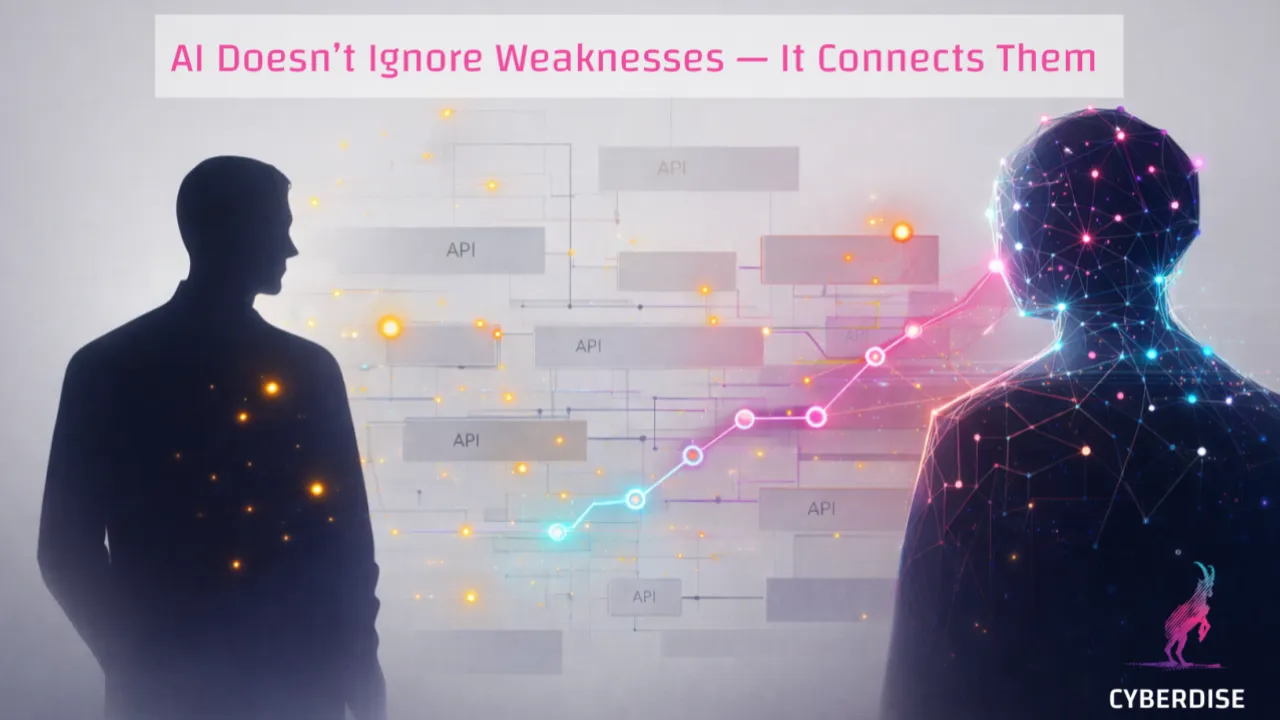
What happens after not only all vulnerabilities have been found – but then almost all of them have disappeared?
Two weeks ago, Anthropic made headlines with “Mythos” – a model that finds vulnerabilities like no human before it. Last week I wrote about how AI is becoming the better penetration tester.
But the more interesting question comes now: What happens when these systems don’t just find things, but systematically expose everything? And what happens after that?
What remains when technical vulnerabilities shrink
We are probably at the beginning of a phase in which software worldwide will be “X-rayed.” Not selectively – but completely. Machines find bugs faster, at greater scale, and more systematically than any human community ever could.
The consequence is radical: the number of technical vulnerabilities will drop massively over the coming years.
This could, however, have significant side effects – here’s my take:
Some will be hit very hard:
Companies like NSO (Pegasus) will lose their business model. If there are no more 0-day exploits because AI finds the vast majority of these gaps in short order – and ideally makes them patchable – things will get very difficult for Pegasus. 0-days will become rarer, more expensive, and shorter-lived.
What happens next is almost deterministic: global IT will harden. Systems will become more robust. Many of today’s known attack paths will disappear.
In the end, two categories primarily remain:
- Vulnerabilities withheld by nation-states
- …and the human being
Social engineering is exploding
From here it gets uncomfortable:
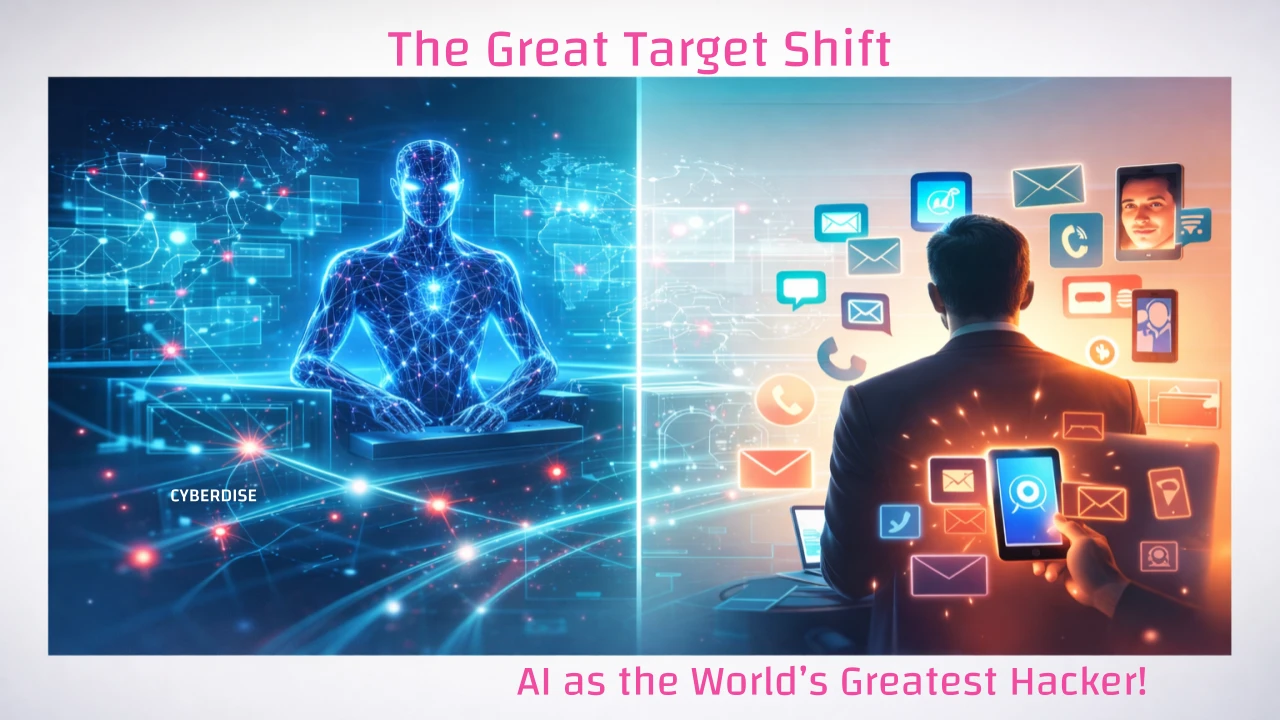
While technical attack surfaces shrink, another category is exploding: social engineering. What other option do the “bad guys” have?
The data is clear:
- 47% [1] or 67% [2] of all breaches begin with phishing or social engineering (depending on the study)
- 3.4 billion phishing emails are sent daily, over 80% already AI-generated [3]
- AI phishing campaigns are up to 42% more successful than classical attacks [4]
- 63% of security experts see AI social engineering as the top threat in 2026 [5]
And the quality is changing fundamentally – a process we can already observe today: no more typos, no more “Nigerian prince.” Instead, perfectly personalized, multi-stage attacks across email, SMS, WhatsApp, Teams, calls, and deepfake video [6].
Let’s be blunt:
Technology is becoming more secure – but humans remain vulnerable.
A second development compounds this: AI is not only a technical hacker, but increasingly the better social engineer too. The Harvard study “Evaluating Large Language Models’ Capability to Launch Fully Automated Spear Phishing Campaigns” demonstrates exactly this: AI can create more convincing and more scalable spear-phishing campaigns than humans – fully automated and significantly cheaper.
Why attackers are moving from technology to humans
AI has been the better hacker since at least 2024:
This shifts the playing field.
The old pattern:
- Developing exploits: expensive, slow, selective
- Social engineering: manual, limited scalability
Today:
- Exploits are automatically discoverable through AI (and will soon be patched faster)
- Social engineering is automated and cheaply scalable
The result: attackers go where the returns are still good. And the highest returns lie with the human.
My hypothesis: The next two years belong to the “good guys.” We will harden systems, close gaps, stabilize infrastructure.
At the same time, attackers are already shifting their focus – away from technology, toward the user. Because when the technology is airtight, only one direct route remains: manipulation.
The target becomes emotion rather than technical exploit. Trust rather than buffer overflow.
Even I, as an expert, recently fell victim to an extremely well-crafted phishing campaign. The risk of this happening more frequently is real.
Cybersecurity becomes a behavioral problem
Conclusion: We are moving into a world where software is more secure than ever before – but where humans are more squarely in the crosshairs than ever before.
Cybersecurity has long been a technical problem. Now it is definitively becoming a behavioral problem.
And that is exactly where we need to start: we must begin changing behavior – not just protecting systems.
At CYBERDISE, we are therefore deliberately evolving: from classical awareness training toward systems that measurably improve human behavior.
Sources
[1] IBM Cost of a Data Breach Report 2024 https://cdn.sanity.io/files/d9ejloir/production/f3d23352decd2999c6a6ca411fa178864512cdfd.pdf
[3] https://app.stationx.net/articles/phishing-statistics
[4] https://spacelift.io/blog/social-engineering-statistics
[5] https://www.infosecurity-magazine.com/news/ai-social-engineering-top-cyber/