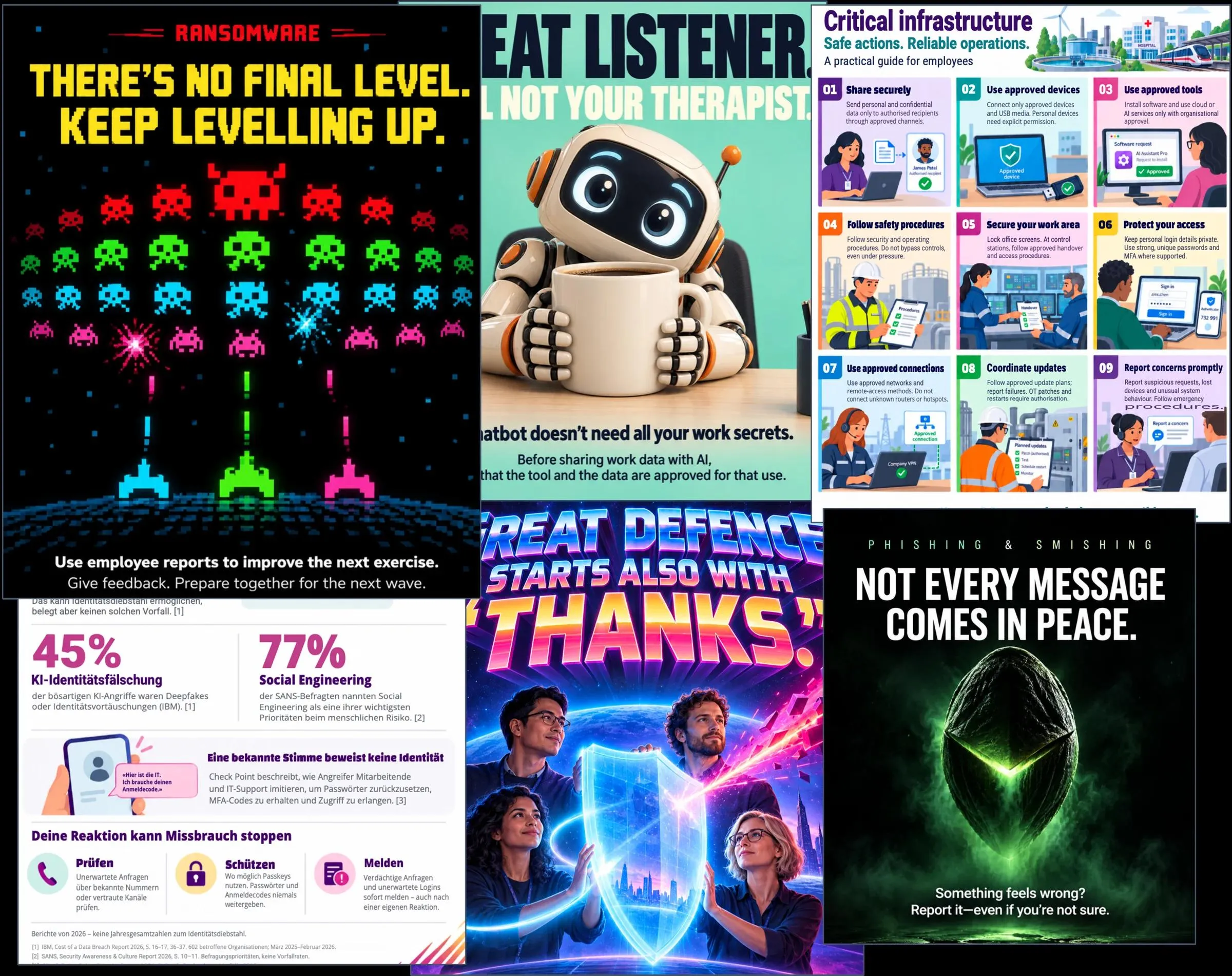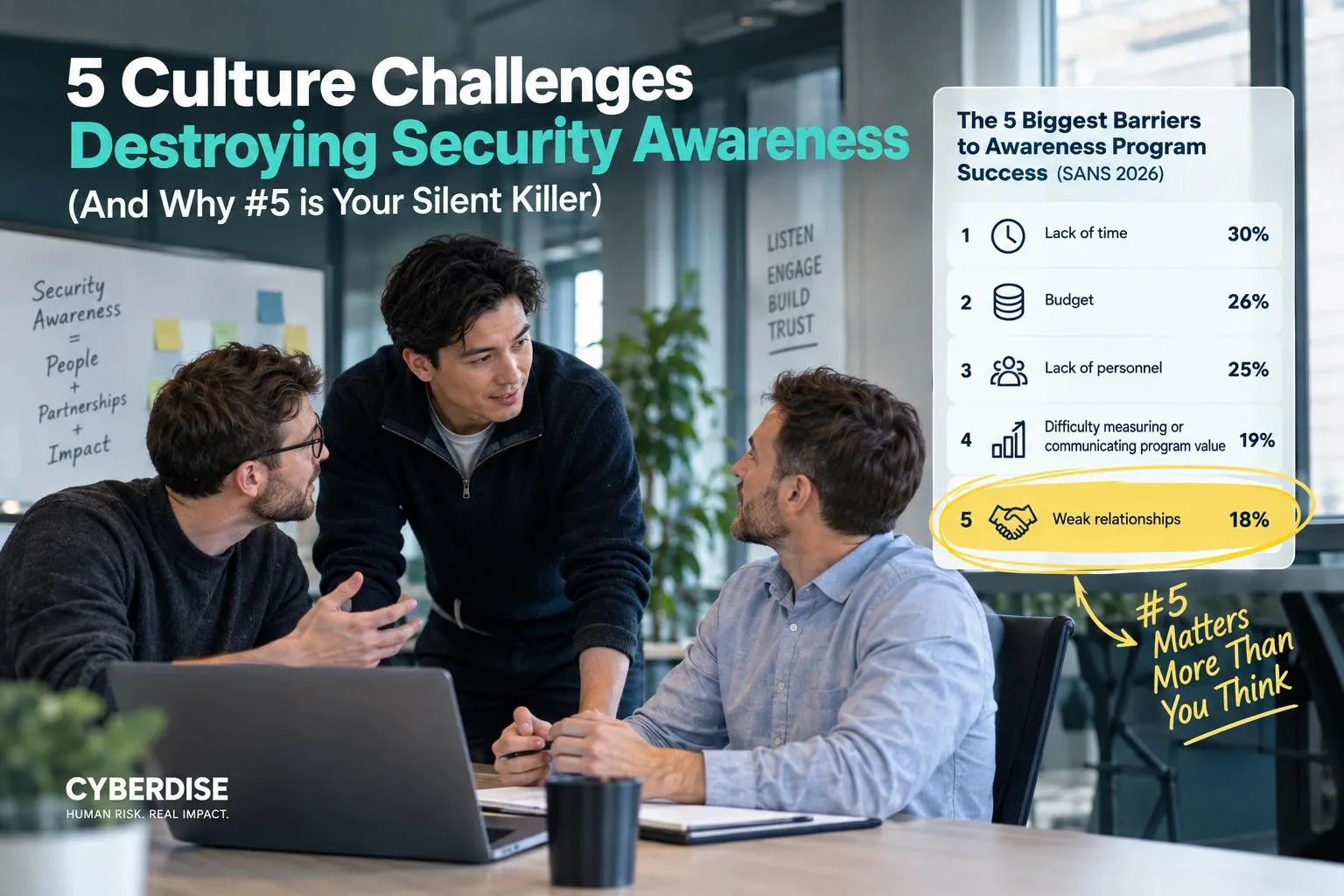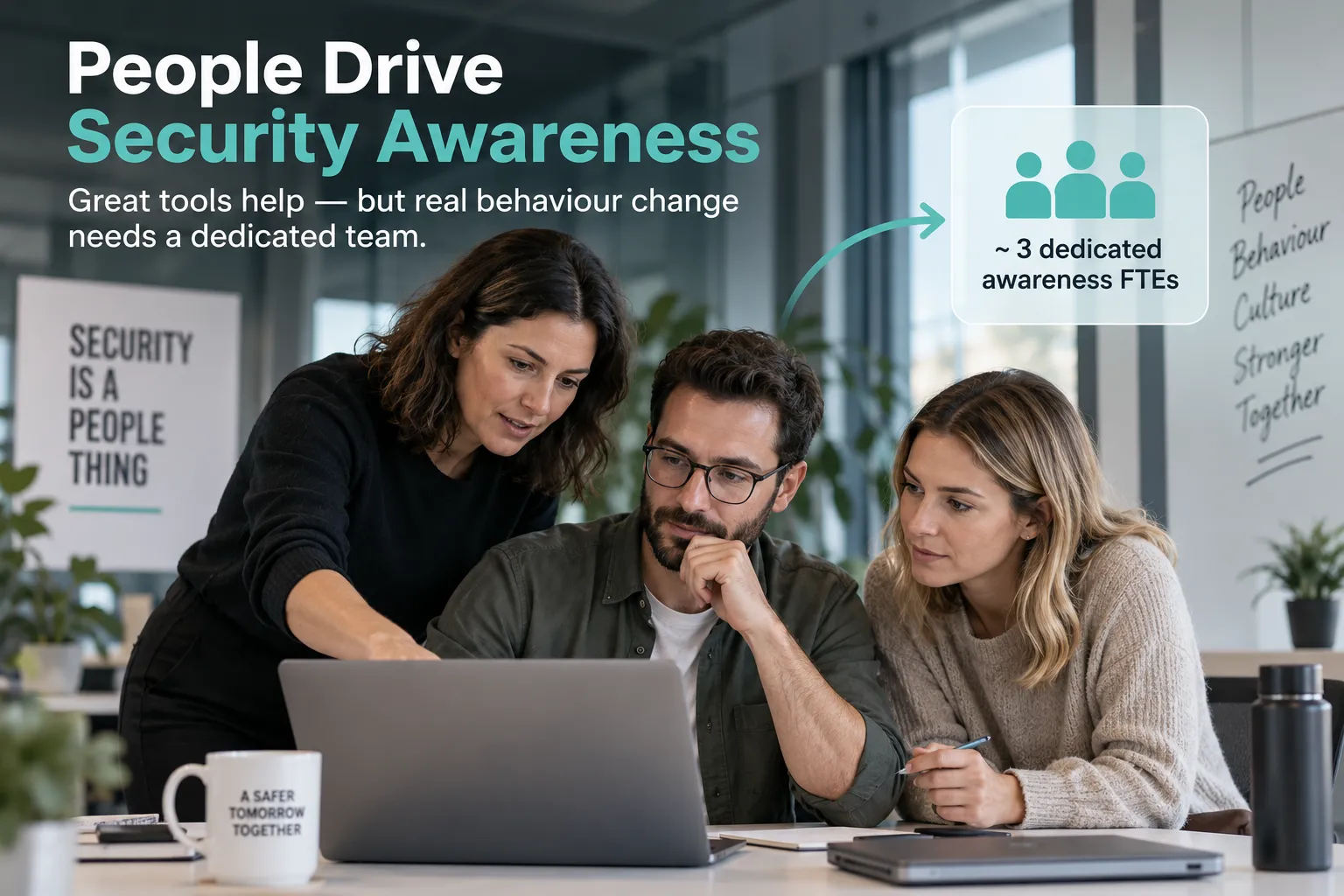
October marks Cybersecurity Awareness Month – a time to remember that people remain the “weakest link” in cyber defense.
The evolution of Security Awareness
In the early days, cybersecurity training was not yet fully understood. Most attempted to educate their staff through training, and the first phishing campaigns for educational purposes were conducted. And compliance wasn’t that important yet.
Over time, organizations started to run structured awareness campaigns also containing a higher degree of simulated attacks. Today the emphasis is on compliant – and effective – human risk management: evidence-based, behavior-driven programs.
And, today, AI play a role in lastingly decreasing the human errors in cybersecurity – again, effectively and compliant. For example, AI enables “real-time threat detection, machine learning, and user behavior analysis” to deliver dynamic, customized training. Modern training combines behavioral science and adaptive technology – replacing static modules with interactive, on‑demand lessons tailored to each user’s risk profile (and even realistic AI-generated phishing attacks).
- 1st-gen, 1990s–2000s: E-learnings and simple phishes
- 2nd-gen, 2010s: Generic awareness campaigns – more structure, limited engagement
- 3rd-gen, today: Human-centric, AI-powered programs – frequent simulations, measurable behavior change, and flexible customization
In this era of cybersecurity awareness, the most mature organizations measure security behavior, not just course completions. They look for platforms that integrate seamlessly, localize content effectively, and align with internal policies and cultures, while solutions – like CYBERDISE Awareness – reflect this shift toward measurable, AI-supported, behavior-focused awareness.
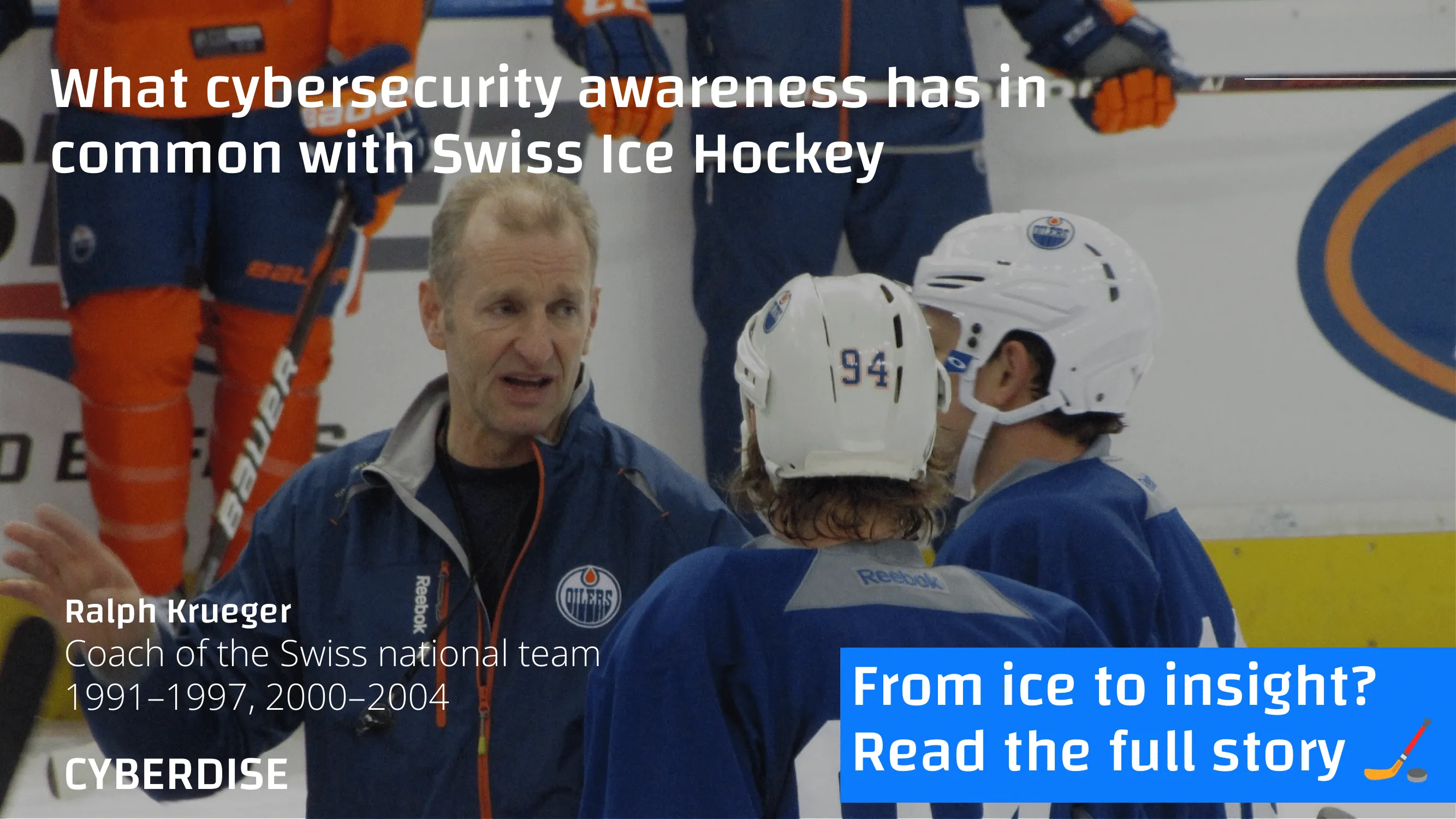
Lessons from Swiss ice hockey
As part of Cybersecurity Awareness Month, I looked beyond IT for inspiration: What Awareness has in common with Ice Hockey
In my latest article, which was published in it business, I draw a parallel: building a strong cybersecurity culture is a lot like building a winning hockey team. Mindset + practice + frequent reinforcement are the keys to lasting success. Personalized AI-driven simulations and ongoing drills can dramatically improve awareness—just as Swiss hockey did to rise to the top.
Finally we scientifically know how great awareness works, we show you how!