Skip to content

Investors and Founders: What Are the Criteria for Shared Success?

After hundreds of conversations with investors over the past 15 years, the author turns the pitch around: five qualities worth wanting in an investor, and five to be wary of.

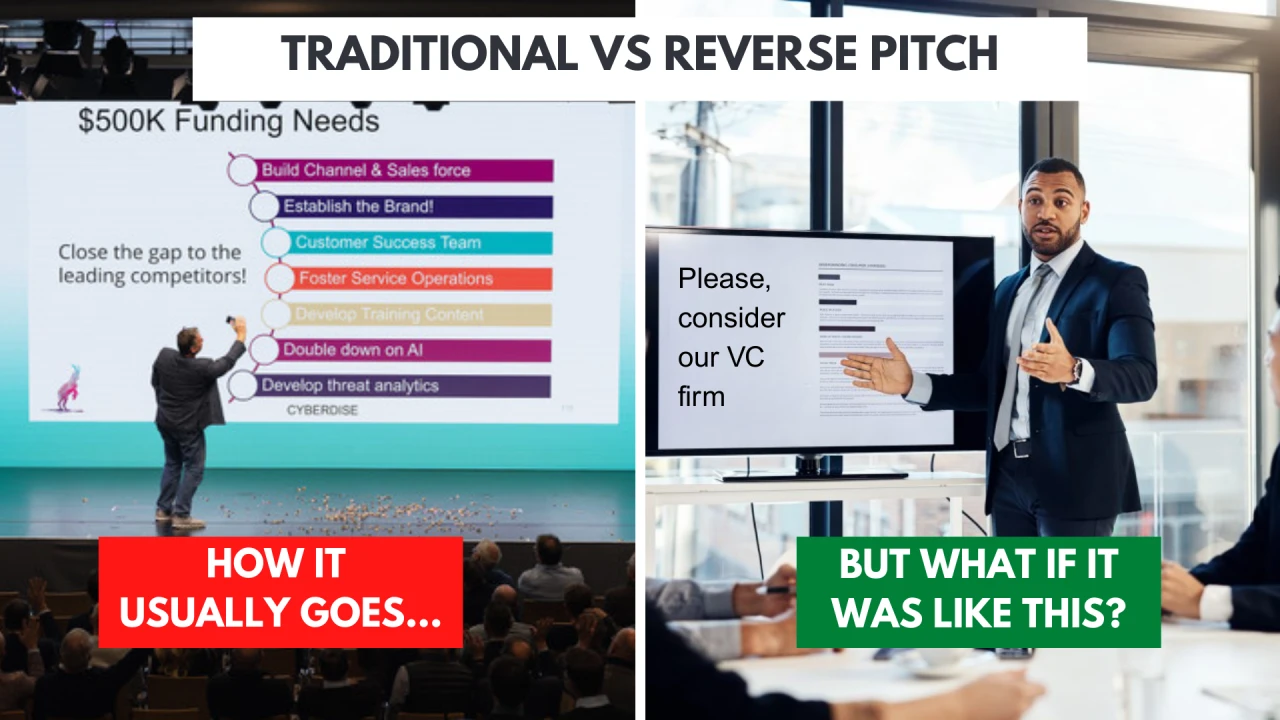
"Traditional vs reverse pitch": a founder pitches "$500K Funding Needs" on stage, a VC pitches "consider our VC firm"
In this article

"Yes, I’m a founder. I’m working on the second success of my third startup. "

Over the past 15 years, I’ve had hundreds of conversations with investors – and yet, I’ve never really thought about what it would be like if an investor had to pitch to me, not the other way around.

What would I look for?

Five qualities I'd want in an investor

1. Operational and Industry Expertise with a Scaling Mindset

I value VCs who bring more than just money – those with hands-on experience, especially entrepreneurial and industry-specific knowledge. Ideally, from my industry (cybersecurity). And if they’ve scaled businesses in this space? Even better. 😊

2. Long-Term Thinking and Vision

It would be fantastic if my investor looked beyond the next quarter and truly understood market evolution. KPIs are important – but hopefully long-term ones. As a founder, I’m (too) often working in the business and (too) rarely on the business. If someone could compensate for that…

3. Competent Relationship Built on Trust

If the investor becomes a true partner who understands the unique aspects of our business model and provides constructive challenges – amazing.

4. Access to a Network That Converts

An ideal investor or VC can open real doors: CISOs from SMI/DAX/CAC companies, MSSPs, leading security experts, or partnerships with system integrators. In my industry, the channel (distributors and resellers) is critical – if they can help us access this, even better!

5. Speed and Transparency

I value directness and transparency. Speed is always good – not rushed, but reasonably quick.

Five qualities I'd be wary of

1. Micromanagers and Know-It-Alls

Several investors have tried to explain how I should build the market or even my product. I listened to those from my industry—but most weren’t. Constantly asking for minor details can be a red flag (though yes, details can be important!).

2. Herd Mentality

No comments.

3. KPIs for Everything, All the Time

How do you measure the human customer relationship (which is crucial in B2B)? Or the brand? One of my previous companies was reduced to CAC/LTV tables and pipeline metrics. All of that matters – but it’s not everything.

4. Purely Financial Perspective

Everyone wants to make money – of course, investing in CYBERDISE Awareness is a financial participation. What you could earn is highly relevant – so are our BHAG and values.

5. Lack of Warmth and Respect

Investors don’t need to be like the people in our company. But a basic level of warmth is necessary, and mutual respect is non-negotiable.

Closing questions

What did I forget? What else is important – or not?

Either way, I’m looking forward to Startup Days 2025 in Bern #SUD25 🎊

What kind of expertise should an investor bring?
More than just money: hands-on experience, especially entrepreneurial and industry-specific knowledge – ideally from the author's own industry, cybersecurity. Investors who have scaled businesses in this space are even better.
Why does long-term thinking matter in an investor?
It would be fantastic if an investor looked beyond the next quarter and truly understood market evolution. KPIs are important, but hopefully long-term ones. As a founder, the author is (too) often working in the business and (too) rarely on the business, and an investor could compensate for that.
What network should an ideal investor offer?
An ideal investor or VC can open real doors: CISOs from SMI/DAX/CAC companies, MSSPs, leading security experts, or partnerships with system integrators. In the author's industry, the channel (distributors and resellers) is critical, so an investor who can help access it is even better.
Why can a micromanaging investor be a red flag?
Several investors have tried to explain how the author should build the market or even the product, and most of them were not from the author's industry. Constantly asking for minor details can be a red flag, though details can be important.
What is wrong with KPIs for everything, all the time?
How do you measure the human customer relationship, which is crucial in B2B, or the brand? One of the author's previous companies was reduced to CAC/LTV tables and pipeline metrics. All of that matters – but it's not everything.
How much does the financial side count?
Everyone wants to make money, and investing in CYBERDISE Awareness is a financial participation. What investors could earn is highly relevant – and so are the company's BHAG and values.
What role do warmth and respect play?
Investors don't need to be like the people in the company. But a basic level of warmth is necessary, and mutual respect is non-negotiable.
Book a DemoDownload

Sources

  1. Investors and Founders: What Are the Criteria for Shared Success?Cyberdise

Written by

Palo Stacho

Founder and Managing Director

Founder and Managing Director of Cyberdise AG in Zug, Switzerland. He writes about the state of the awareness industry and why behavior, not knowledge, decides whether an attack succeeds.