Skip to content
Topic

Behavioral Defense Engineering

Public web context and current attack intelligence flowing into a realistic phishing exercise
PhishingLeverage the Dark Side of the Web for the Better

CYBERDISE uses dual-use OSINT to connect the context of your employees with the attacks they may encounter. Public information helps shape relevant exercises, and intelligence about current attacks keeps them up to date. The result is a practical way to prepare people for realistic situations while reducing the work of researching and building new scenarios.
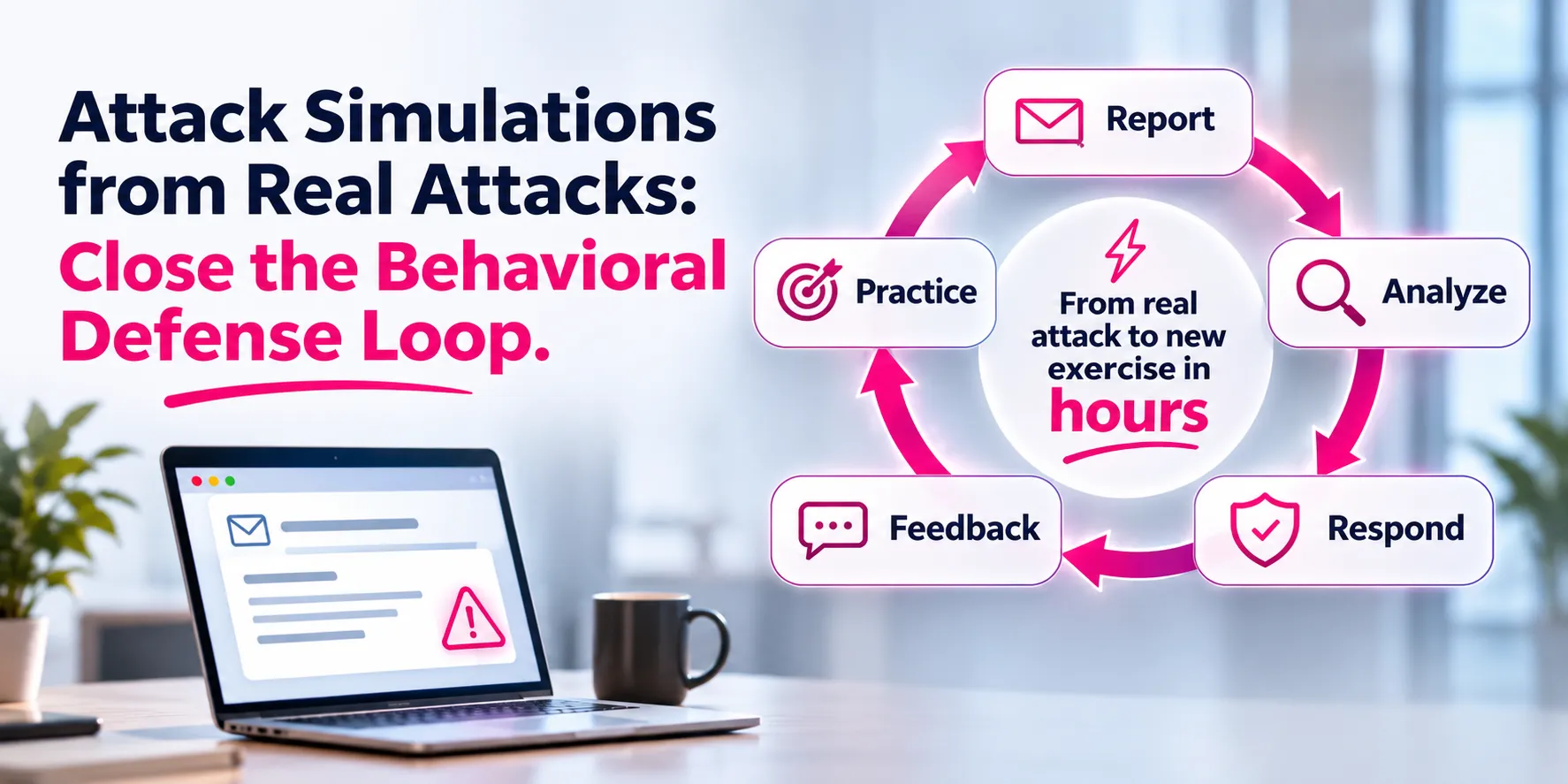
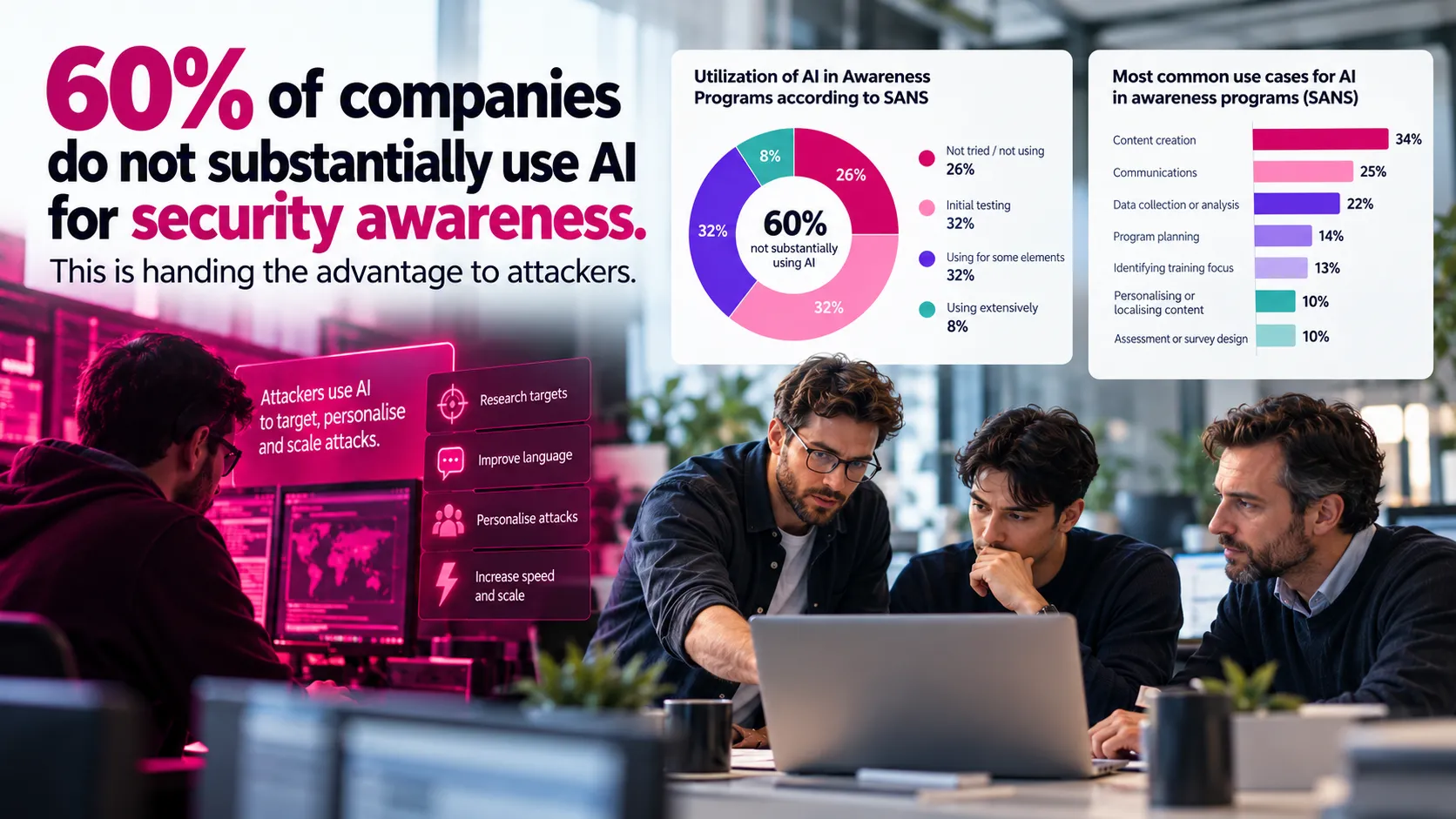
Diagram: an employee reports an attack, the SOC or platform classifies it, the attack is rebuilt as a safe exercise, and colleagues practice it
PhishingPhishing Simulations from Real Attacks: Practice Better Decisions

A phishing report reveals a decision other employees may face tomorrow: whether to approve a payment, enter credentials or follow an unusual instruction. Cyberdise connects that report with security response, useful feedback and a safe exercise, so you can see how people respond when the same tactic returns with a different story. We call this approach Behavioral Defense Engineering.

Split scene: on one side an AI connects personalised lures into fast, targeted attacks; on the other an awareness team uses AI only to produce slides and videos
AIAI in Security Awareness: Why 6 in 10 Teams Hand Attackers the Edge

Attackers are already using AI to research targets, improve language and adapt social engineering at speed. The 2026 SANS Security Awareness & Culture Report shows that 58% of awareness teams have not moved beyond first experiments, and most of the rest use AI to produce content rather than to change behavior.

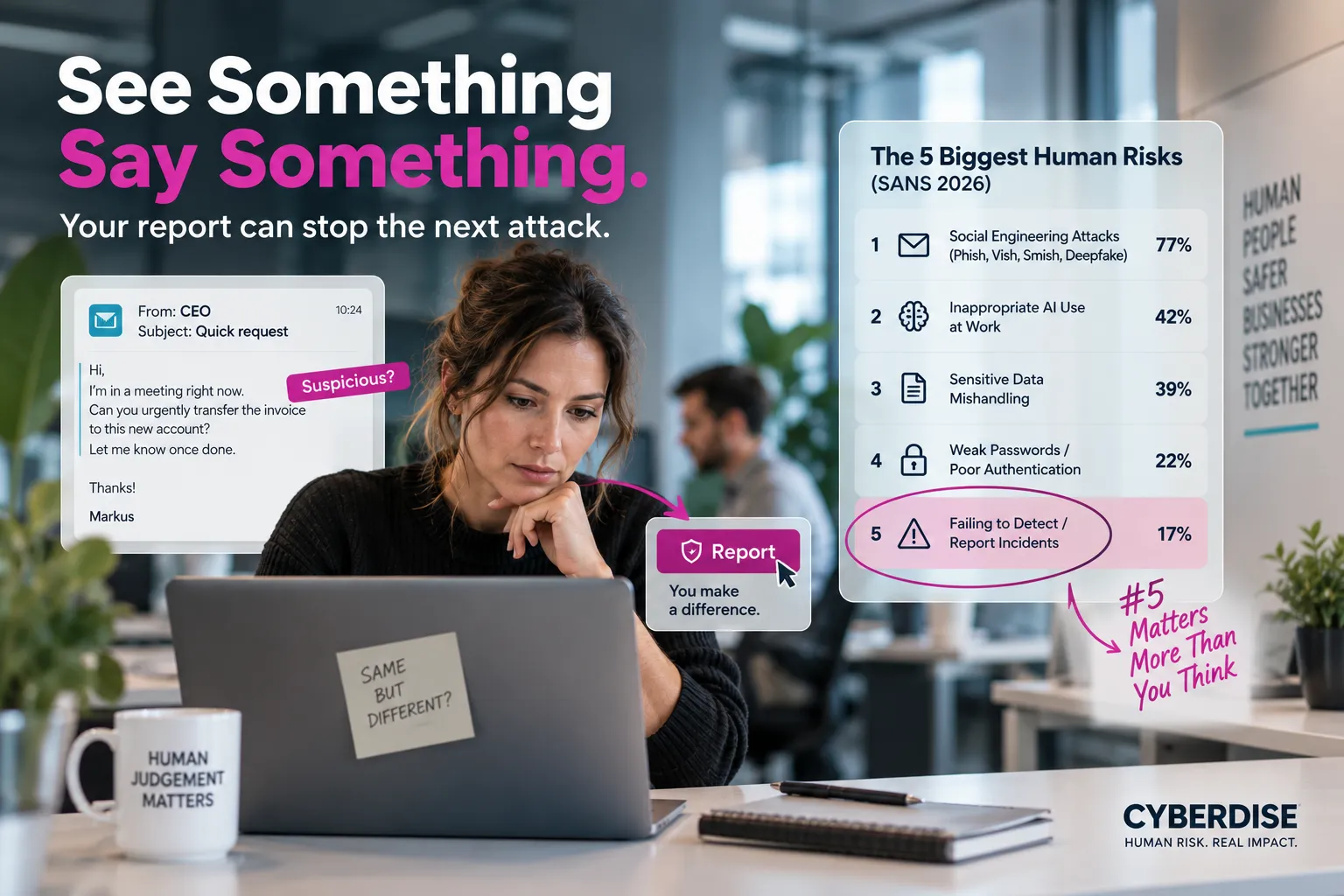
Poster "See Something. Say Something.": woman at a laptop beside SANS 2026 top-5 human risks, #5 failing to report circled
Behavioral Defense EngineeringThe 5 Biggest Human Risks in Cybersecurity - and Why #5 Is Ignored

In the 2026 SANS Security Awareness & Culture Report, more than 1,700 practitioners named the risks they are focusing on, and social engineering came out on top at 77%. The fifth risk on the list gets no section of its own, and that is exactly the one I want to talk about.

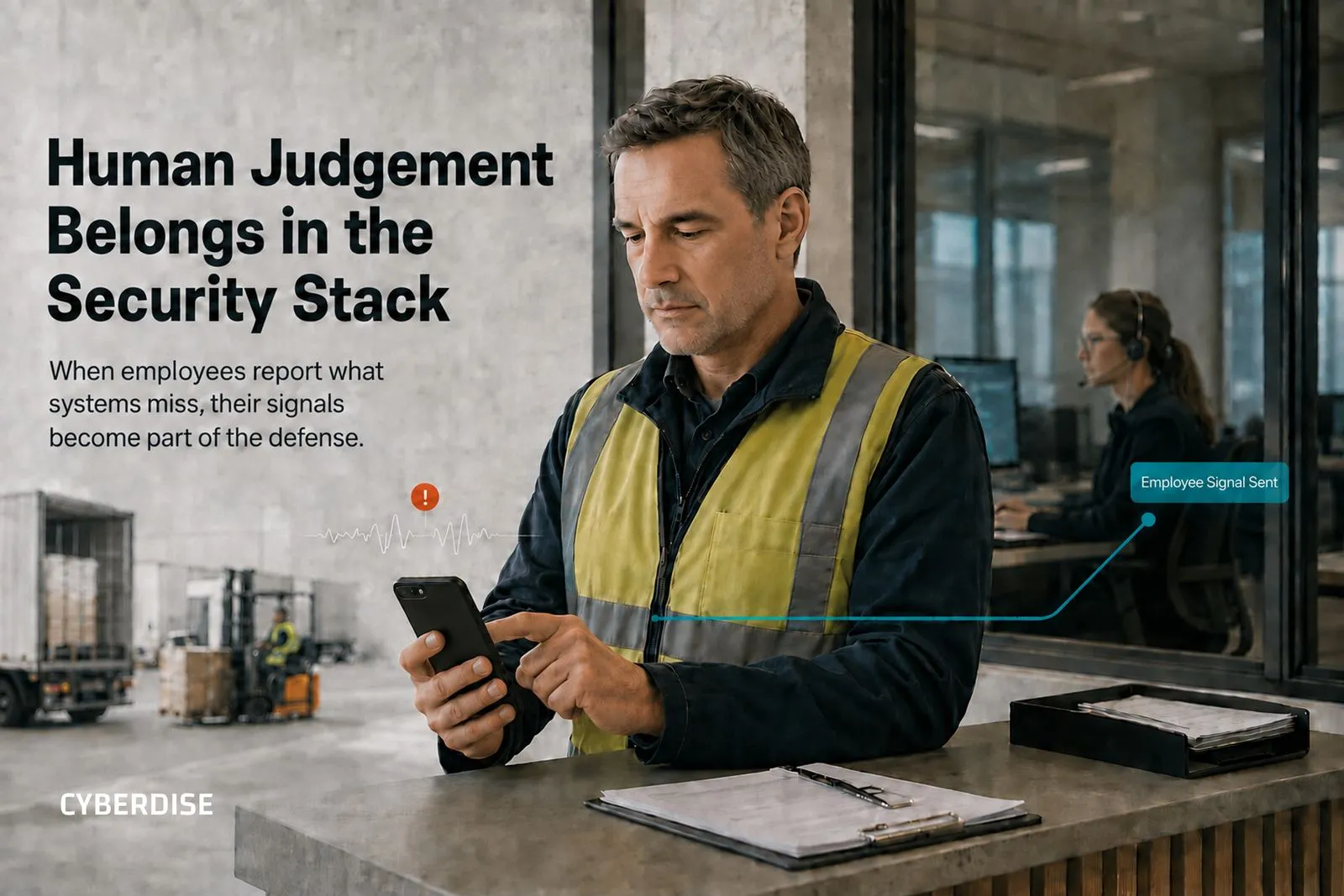
A warehouse employee checks a suspicious message on his phone while a signal labelled Employee Signal Sent reaches a colleague at a security workstation
Behavioral Defense EngineeringWhy the Employee Has to Become Part of the Security Stack

AI is pushing cyber defense to machine speed, but the answer is not to remove people from the equation. It is to treat the human layer — the judgment, decisions and reports of employees — as part of the security stack.

Screenshot of itbusiness.ch: article "Cyberabwehr beginnt beim Verhalten" with a close-up photo of a blue eye
PressBehavioral Defense Engineering: Cyberdise in itbusiness.ch

Swiss IT publication itbusiness.ch has featured Cyberdise, and the headline says it all: cyber defense begins with behavior. Its June 2026 article argues that security awareness training alone no longer protects organizations.

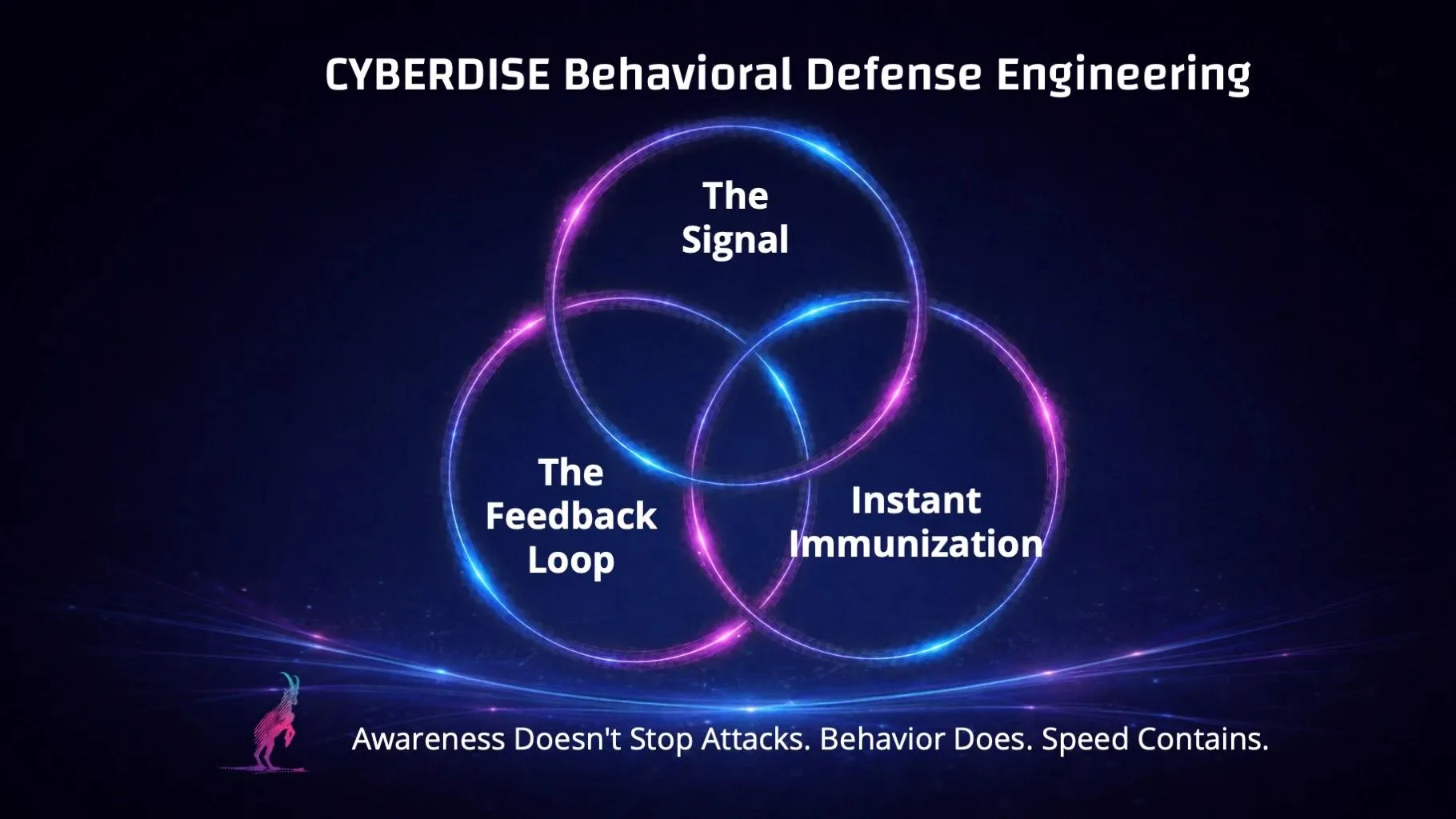
CYBERDISE Behavioral Defense Engineering: three overlapping circles, the signal, the feedback loop and instant immunization, above the line Awareness doesn't stop attacks. Behavior does. Speed contains.
Behavioral Defense EngineeringAwareness doesn't stop attacks. Behavior does.

For two decades, security awareness programs have transferred theoretical knowledge — and measurable organizational risk stayed high. With Behavioral Defense Engineering and platform version V3.2, CYBERDISE treats human behavior as an operational part of IT security instead of a compliance checkbox.

Feature Image
Behavioral Defense EngineeringThe Next Giant Leap: Why It Is Time to Redefine Human Cybersecurity

Cyberdise is moving from traditional security awareness to Behavioral Defense Engineering (BDE). Employees already know phishing is dangerous, yet under the pressure of daily business they still click: the issue is not a lack of knowledge, it is a behavioral gap.