Skip to content

Blog

Research, guides and category thinking on Behavioral Defense.

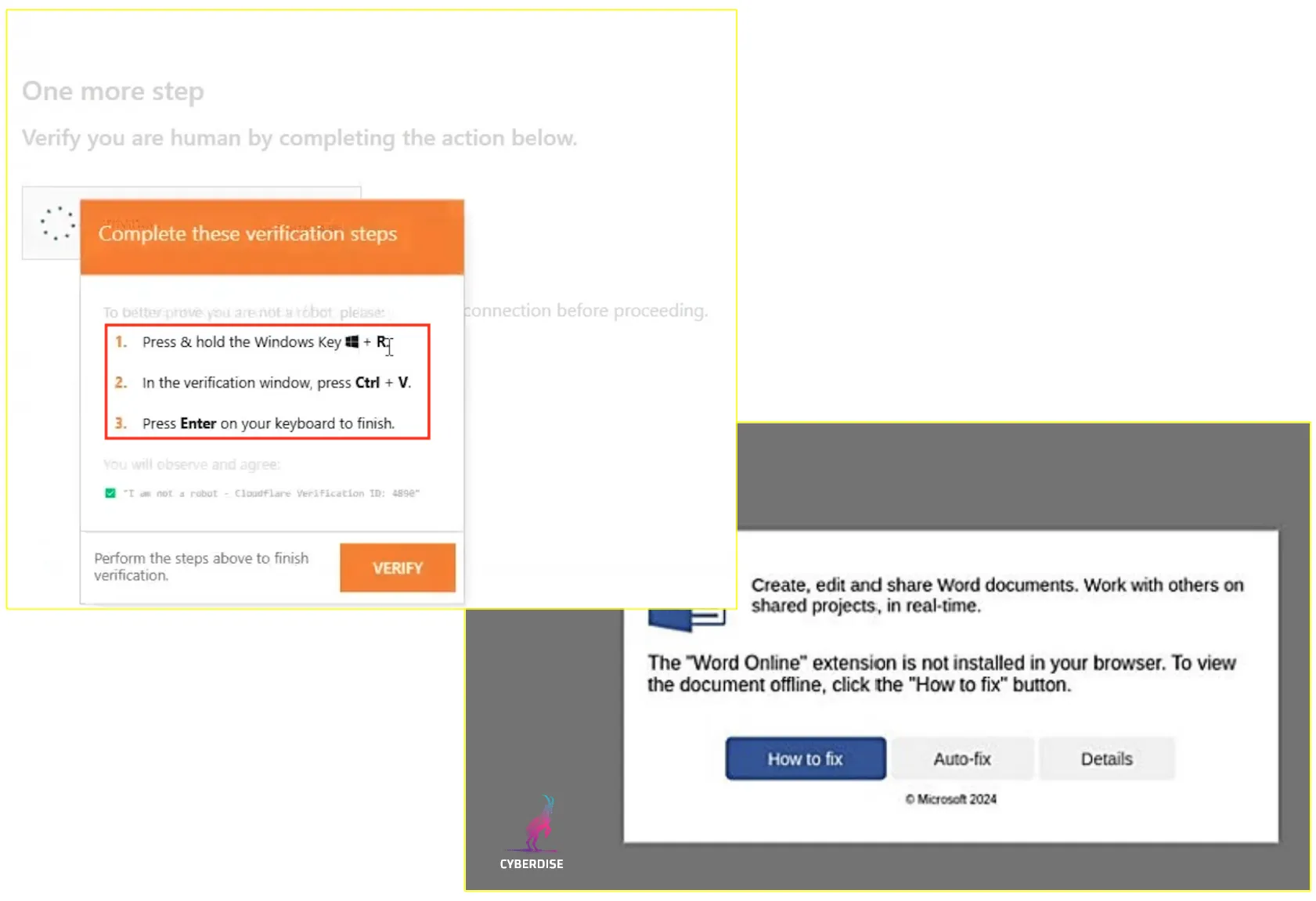
Two example ClickFix lures: a fake verification page telling the user to press Windows + R, then Ctrl + V and Enter, and a fake Microsoft Word error with a "How to fix" button
Social EngineeringClickFix: when the user runs the attack

ClickFix does not ask employees to open a malicious attachment. It guides them through what looks like a routine repair or verification step until they execute the attack themselves. Here is how to build a ClickFix simulation in Cyberdise Awareness — from scenario selection to delivery and measurement.
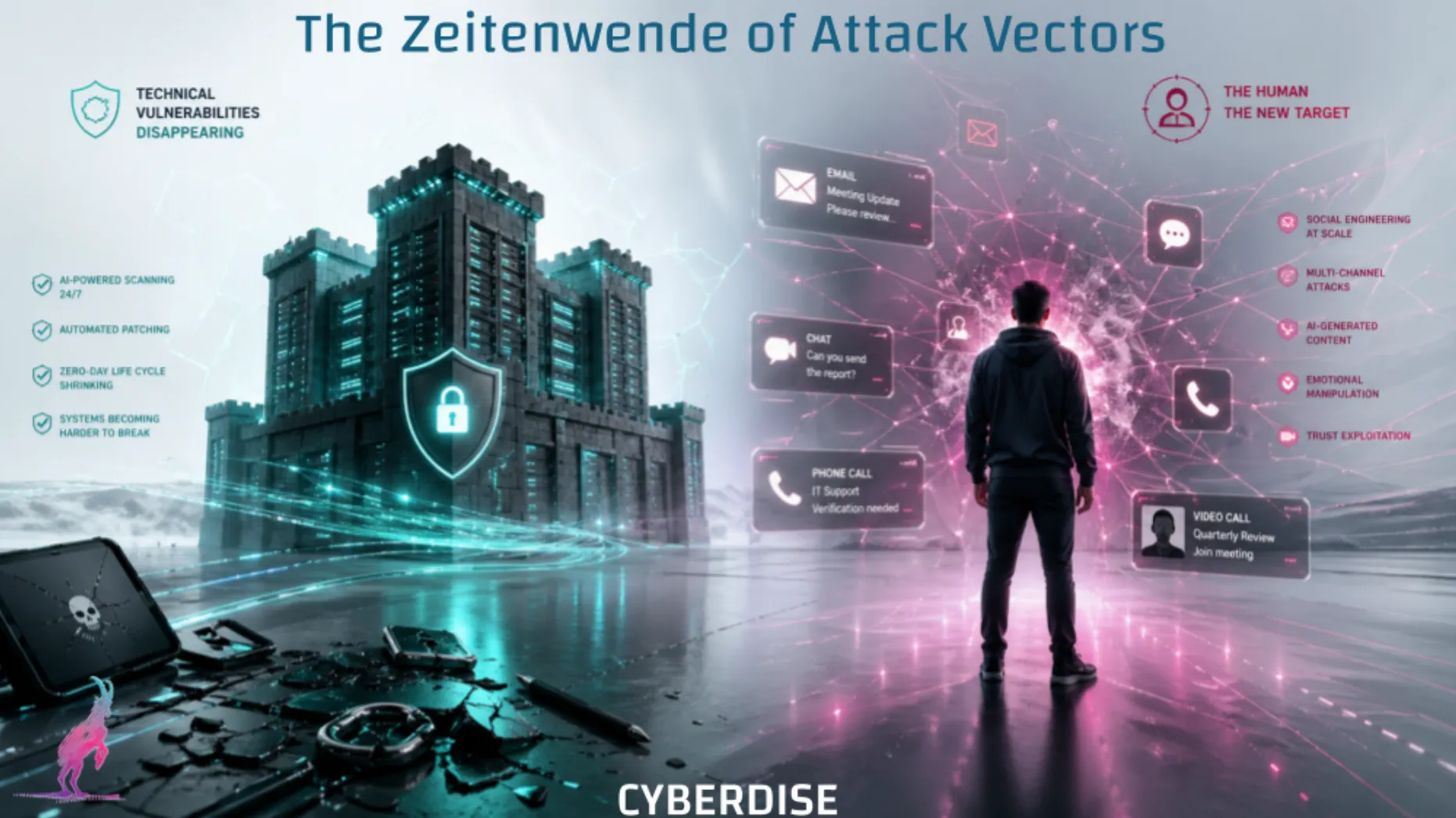

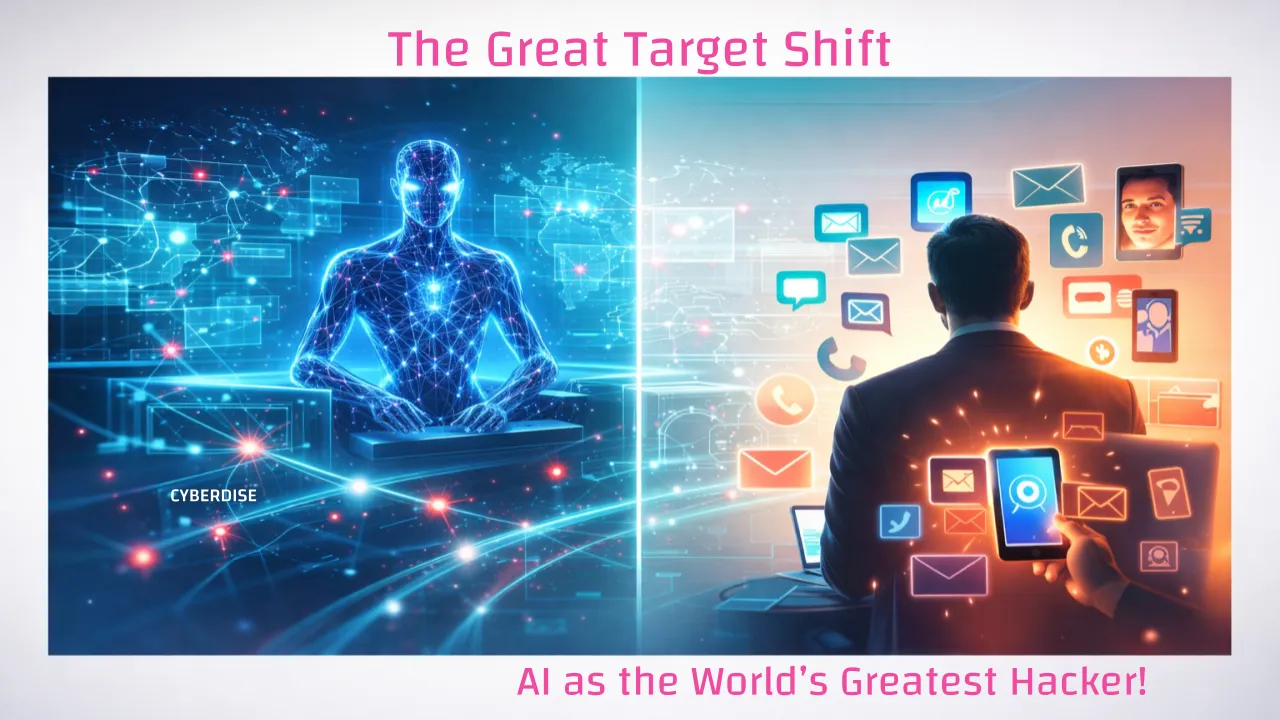
Title card "The Zeitenwende of Attack Vectors": a secured fortress for disappearing technical vulnerabilities on the left, a man surrounded by email, chat, phone and video-call messages as the new human target on the right
Threat LandscapeThe Zeitenwende of Attack Vectors

What happens when technical vulnerabilities disappear in the future – and humans become the primary target? There is a lot of talk right now about AI becoming the better hacker. That is only the first phase; the real shift begins after it.

Screenshot of itbusiness.ch: article "Cyberabwehr beginnt beim Verhalten" with a close-up photo of a blue eye
PressBehavioral Defense Engineering: Cyberdise in itbusiness.ch

Swiss IT publication itbusiness.ch has featured Cyberdise, and the headline says it all: cyber defense begins with behavior. Its June 2026 article argues that security awareness training alone no longer protects organizations.

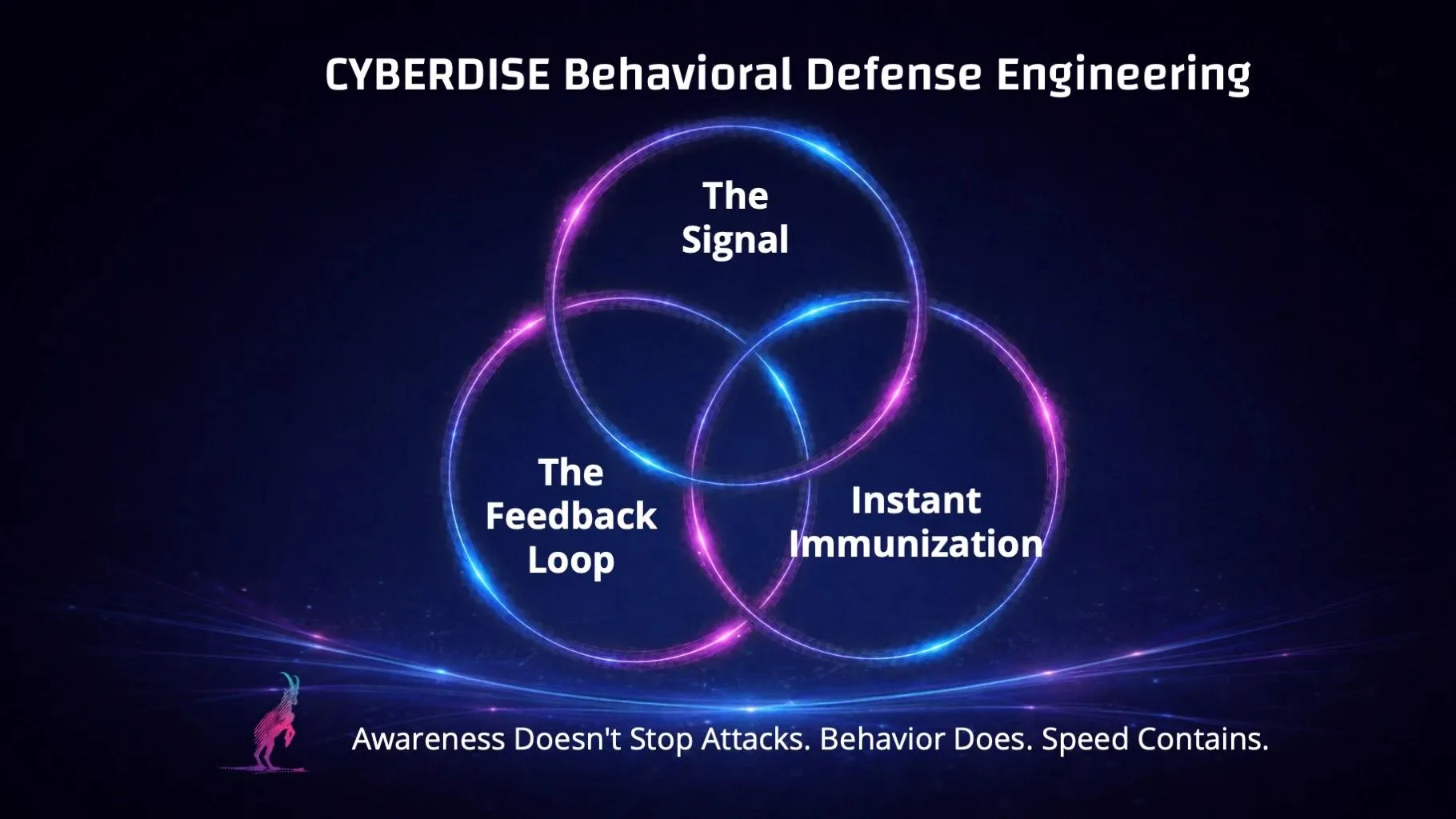
CYBERDISE Behavioral Defense Engineering: three overlapping circles, the signal, the feedback loop and instant immunization, above the line Awareness doesn't stop attacks. Behavior does. Speed contains.
Behavioral Defense EngineeringAwareness doesn't stop attacks. Behavior does.

For two decades, security awareness programs have transferred theoretical knowledge — and measurable organizational risk stayed high. With Behavioral Defense Engineering and platform version V3.2, CYBERDISE treats human behavior as an operational part of IT security instead of a compliance checkbox.

Feature Image
Behavioral Defense EngineeringThe Next Giant Leap: Why It Is Time to Redefine Human Cybersecurity

Cyberdise is moving from traditional security awareness to Behavioral Defense Engineering (BDE). Employees already know phishing is dangerous, yet under the pressure of daily business they still click: the issue is not a lack of knowledge, it is a behavioral gap.

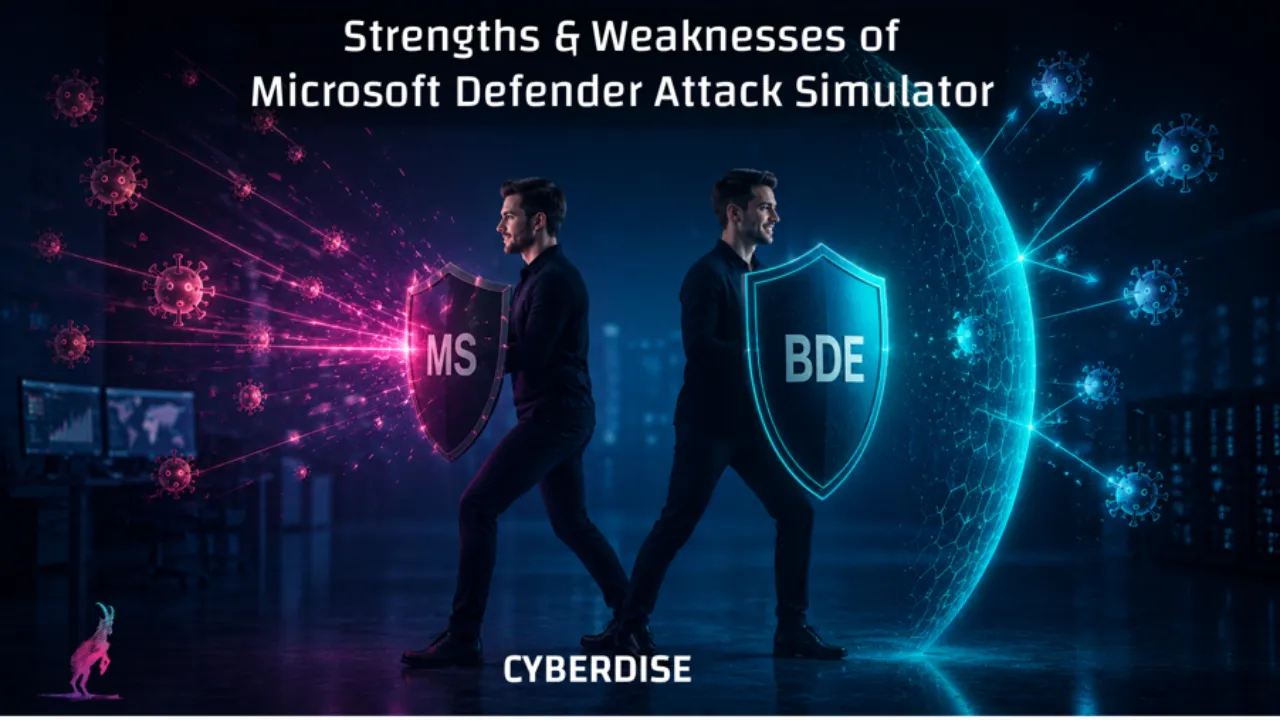
Title card "Strengths & Weaknesses of Microsoft Defender Attack Simulator": two men holding shields labelled MS and BDE against incoming attacks
ComparisonsDefender Attack Simulator: strengths and limits

Microsoft Defender for Office 365 ships with its own phishing simulation and awareness platform. In some areas it is very good. In others, structural limits appear very quickly. This is a deliberately balanced look at both sides.

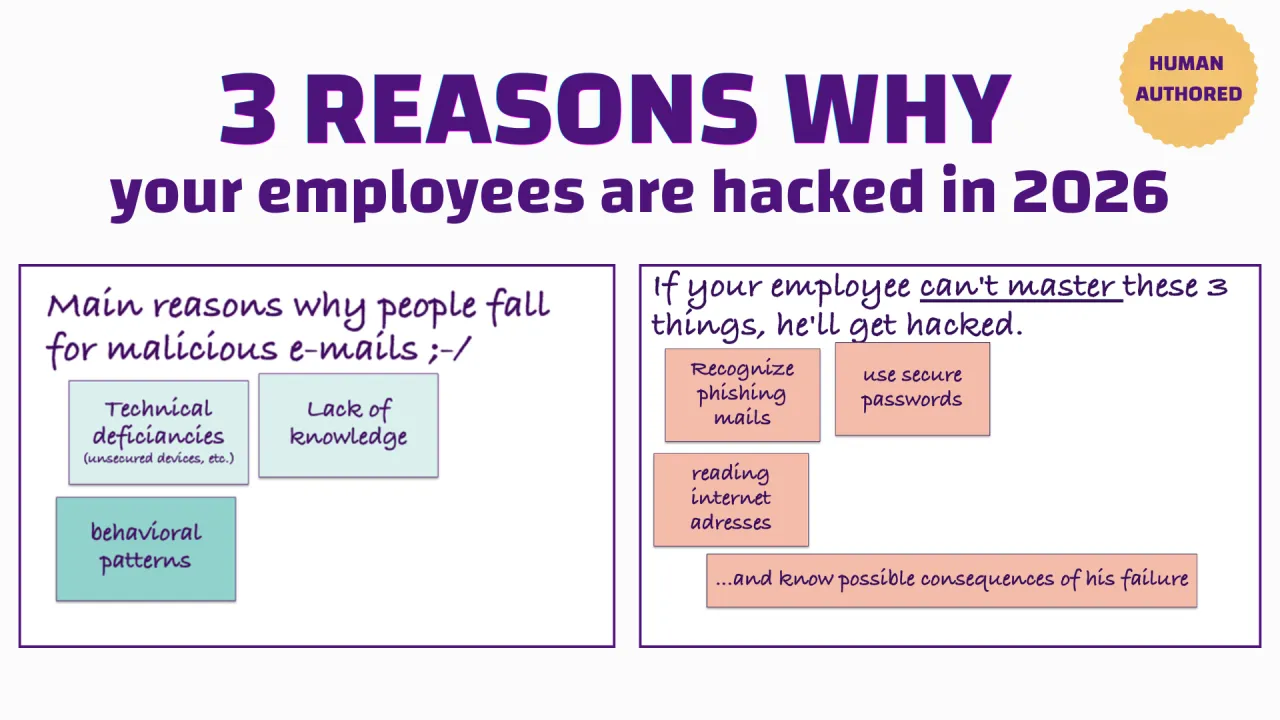
Title card "3 Reasons Why your employees are hacked in 2026": notes naming the main reasons (technical deficiencies, lack of knowledge, behavioral patterns) and the three things employees must master (recognize phishing mails, use secure passwords, read internet addresses)
Human RiskThe Three Reasons Why Employees Get Hacked

Nearly half of all successful cyberattacks start with a negligent employee. Search engines will tell you it comes down to phishing, weak passwords and careless data handling. Look closer and all three say the same thing: this is about people.

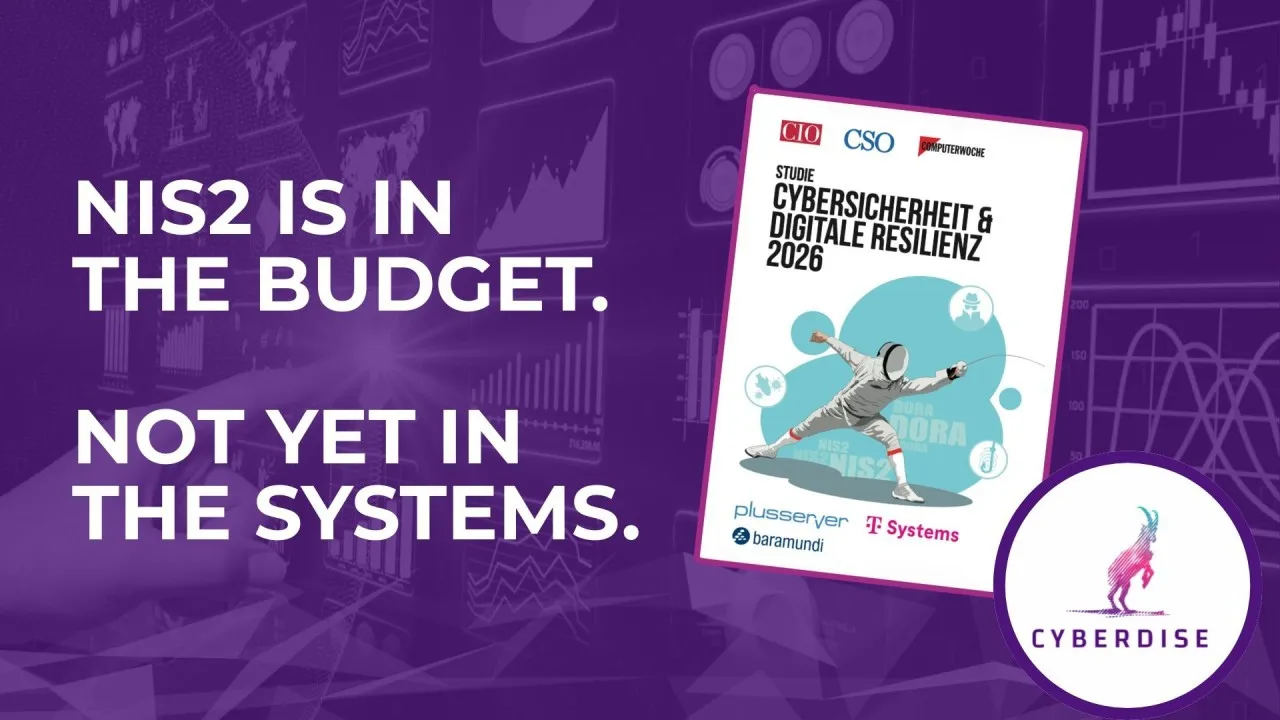
Title card: "NIS2 is in the budget. Not yet in the systems." with the cover of the CIO/CSO/Computerwoche study
Security AwarenessNIS2 Is in the Budget - Not Yet in the Systems

A study by CIO / CSO / Computerwoche, based on 324 interviews with senior IT decision-makers across DACH, shows how NIS2 is reshaping the way organisations think about cybersecurity. But compliance and actual resilience are still far apart.